
Editorial
The Ultimate Guide to the Rolex Daytona
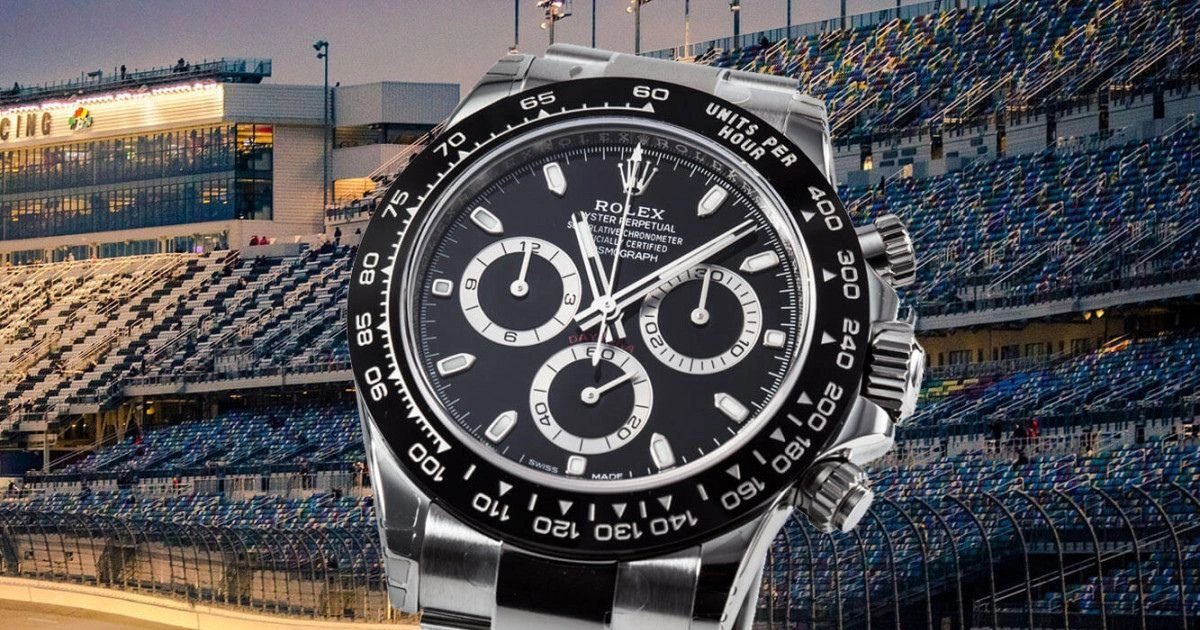
Few watches in the history of horology command the level of respect, admiration, and sheer desire as the Rolex Cosmograph Daytona. What began in 1963 as a purpose-built tool for racing drivers has evolved into perhaps the most iconic chronograph wristwatch ever created. Whether you’re a seasoned collector or a newcomer eager to understand the legend, this guide will walk you through everything you need to know about the Rolex Daytona—its origins, its evolution, and the technical mastery that defines it today.
The Birth of a Legend: 1963
The story of the Daytona begins not in Florida, but in the heart of motorsport culture. Rolex became the official timekeeper of the Daytona International Speedway in 1962. To celebrate this partnership, the brand introduced the Reference 6239 in 1963—the first chronograph that would eventually bear the Daytona name.
Interestingly, the earliest models didn’t actually say “Daytona” on the dial. The Reference 6239 featured “Cosmograph” below the Rolex signature and was initially nicknamed “Le Mans” by enthusiasts, referencing the famous 24-hour endurance race in France. It wasn’t until 1964 that the word “Daytona” appeared below the 12 o’clock signature, and by 1967, it had moved to its now-familiar position above the 6 o’clock sub-dial.
What made the original 6239 revolutionary was its design. Unlike previous Rolex chronographs, which featured tachymeter scales printed on the dial, the 6239 placed the scale on the bezel itself—a sportier, more legible configuration perfect for drivers checking their speeds at a glance.
The Paul Newman Connection
No discussion of the Daytona is complete without acknowledging the man who transformed it from a functional instrument into a cultural icon: Paul Newman. The legendary actor, himself an avid racing enthusiast, received a Daytona as a gift from his wife, Joanne Woodward. The watch featured an “exotic” dial—characterized by blocky square markers at the ends of the sub-dial indices and contrasting colors—that would later become inextricably linked with his name.
Newman wore his Daytona constantly, often on a leather military strap, and was photographed with it for the 1972 book Paul Newman — Les images d’une vie. For decades, collectors referred to these exotic-dial variants as “Paul Newman” Daytonas, but they remained a niche interest until 2017, when Newman’s personal watch—which he had gifted to his daughter’s boyfriend in 1984—sold at auction for an astounding $17.8 million, setting a world record for a wristwatch. That single event catapulted the Paul Newman Daytona into the realm of horological mythology.
The Fourth Generations of Daytona
The Daytona has been produced in four distinct generations, each representing a significant evolution in technology and design.
First Generation (1963-1988): The Manual-Wind Era
The original series is distinguished by four-digit reference numbers and hand-wound movements sourced from Valjoux, specifically the Calibre 72 (later refined into the Calibres 722 and 727). These early Daytonas are the rarest and most sought-after by collectors.
Within this generation, several key references stand out:
- Ref. 6239 (1963–1969): The original Daytona. Features pump pushers (non-screw-down), an engraved stainless steel bezel, and no Oyster-style water resistance.
- Ref. 6240 (1965–1969): Introduced screw-down pushers and the Oyster designation for the first time, improving water resistance to 100 meters.
- Ref. 6241 (1965–1969): Featured a black acrylic bezel insert for higher contrast, paired with pump pushers.
- Ref. 6263 & 6265 (1971–1988): The final evolution of the manual-wind Daytona. Both featured screw-down pushers; the 6263 had a black acrylic bezel, while the 6265 retained the metal engraved bezel.
Collectors categorize these vintage references by two primary features: pusher style (pump vs. screw-down) and bezel type (metal vs. black acrylic). Screw-down pushers offer greater water resistance and a sportier appearance, while pump pushers wear closer to the wrist and feel more authentically mid-century.
Second Generation (1988-2000): The Zenith Era
By the late 1980s, demand for the Daytona had outpaced supply, prompting Rolex to reinvent the model. The Reference 16520, introduced in 1988, marked a seismic shift. It featured a larger 40mm case, a sapphire crystal, and—most significantly—an automatic movement.
Rolex turned to Zenith for their legendary El Primero calibre, the first automatic chronograph movement ever developed. Rolex modified the movement extensively, lowering its frequency from 36,000 to 28,800 vph to enhance reliability and ease of service, and designated it the Calibre 4030. The Zenith-era Daytonas—often called “Zenith Daytonas”—are beloved for their historical significance and represent a bridge between vintage and modern.
Third Generation (2000-2023): The In-House Movement
In 2000, Rolex achieved what enthusiasts had long anticipated: the introduction of a fully in-house automatic chronograph movement. The Calibre 4130 powered the new Reference 116520, the first stainless steel Daytona with a movement engineered entirely by Rolex.
The 4130 was a technical marvel. It utilized a vertical clutch (rather than a lateral clutch) for smoother chronograph activation, reduced the number of movement components for greater reliability, and simplified the hour and minute systems into a single mechanism. This generation also saw the introduction of the now-iconic ceramic bezel. In 2011, Rolex began replacing the metal bezels with Cerachrom—a virtually scratchproof, UV-resistant ceramic that retains its color indefinitely.
Fourth Generation (2023-Present): The Modern Masterpiece
At Watches & Wonders 2023, Rolex unveiled the fourth-generation Daytona, distinguished by five-digit references beginning with “126” and the new Calibre 4131. While retaining the 40mm case size, the new generation features refined case proportions, a redesigned bracelet, and a movement that incorporates Rolex’s latest innovations: the Chronergy escapement, a paramagnetic blue Parachrom hairspring, and Paraflex shock absorbers.
The current catalog offers an array of materials—Oystersteel, 18k yellow gold, white gold, and Everose gold—alongside options for Cerachrom bezels in black or brown, and a variety of dial colors.
The Le Mans Commemorative Series
In 2023, to mark the 100th anniversary of the 24 Hours of Le Mans, Rolex unveiled a special version of the Daytona that has since become one of the most significant modern references: the Ref. 126529LN in 18k white gold.
What sets the Le Mans Daytona apart is the Calibre 4132, a modified version of the 4131 that features a 24-hour chronograph counter at 9 o’clock—a direct functional tribute to the race’s round-the-clock duration. The watch also features a “reverse panda” dial (black with white sub-dials) reminiscent of vintage exotic-dial Daytonas, and a transparent sapphire caseback, an exceedingly rare feature on a modern Rolex.
Following the white gold original, Rolex quietly released yellow gold (Ref. 126528LN) and Everose gold (Ref. 126525LN) versions, creating a trilogy of Le Mans models produced in limited, overlapping runs. Collectors now regard these as a distinct and highly desirable sub-series within the Daytona lineage.
Technical Excellence: The Calibre 4131
The beating heart of the modern Daytona is the Calibre 4131, a movement that embodies Rolex’s commitment to precision and reliability.
Key features include:
- Vertical Clutch: Activates the chronograph with exceptional smoothness and allows the seconds hand to function as a stopwatch without impacting timekeeping accuracy.
- Chronergy Escapement: Developed by Rolex, this escapement is highly energy-efficient and resistant to magnetic fields.
- Parachrom Hairspring: Crafted from a paramagnetic alloy, this hairspring offers up to ten times greater resistance to shocks and is unaffected by magnetic interference.
- Power Reserve: Approximately 72 hours, allowing the watch to run through an entire weekend without winding.
- Superlative Chronometer Certification: Each Daytona undergoes Rolex’s own testing protocol after casing, ensuring precision of -2/+2 seconds per day—twice the standard required by COSC.
The Tachymetric Bezel
A defining visual and functional element of the Daytona is its tachymetric bezel. The tachymeter scale allows the wearer to measure average speed over a known distance. To use it, the driver starts the chronograph at a starting point and stops it after covering one kilometer or mile. The position of the seconds hand on the tachymeter scale indicates the average speed.
Modern Daytonas feature Cerachrom bezels—monobloc ceramic inserts that are virtually scratchproof, corrosion-resistant, and immune to UV fading. The numerals and graduations are deposited via PVD (Physical Vapour Deposition) and coated with a thin layer of platinum or gold for exceptional legibility.
The Oyster Case and Bracelet
The Daytona’s Oyster case guarantees water resistance to 100 meters (330 feet), a remarkable achievement for a chronograph with pushers. The screw-down winding crown, equipped with the Triplock triple-seal system, and the screw-down pushers on Oyster models ensure complete protection.
The Oyster bracelet—with its broad, flat three-piece links—has been the standard for the Daytona since the late 1930s. Crafted from Oystersteel (a 904L steel alloy originally developed for the aerospace and chemical industries), the bracelet offers exceptional corrosion resistance and a brilliant finish after polishing. For those seeking a different aesthetic, Rolex also offers the Oysterflex bracelet—a patented hybrid that combines the robustness of a metal bracelet with the comfort of an elastomer strap.
A Legacy of Innovation and Endurance
What makes the Rolex Daytona truly remarkable is not merely its status as a cultural icon but its unwavering commitment to technical excellence. From the hand-wound Valjoux movements of the 1960s to the cutting-edge Calibre 4131 of today, each generation has advanced the state of chronograph watchmaking.
The Daytona’s journey—from a slow-selling tool watch to the most coveted luxury sports chronograph in the world—is a testament to Rolex’s philosophy of continuous refinement. Whether you’re drawn to the vintage charm of a Paul Newman, the transitional significance of a Zenith-era model, or the technical sophistication of a modern reference, the Daytona offers a lifetime of discovery.
For collectors, the allure lies in the details: the subtle variations in dials, the evolution of bezels, the history of movements. For enthusiasts, it’s the knowledge that wearing a Daytona means wearing a piece of motorsport history. And for everyone else? It’s simply one of the finest chronographs ever made.