Editorial
Seiko History: From a Small Ginza Shop to a Watch Giant
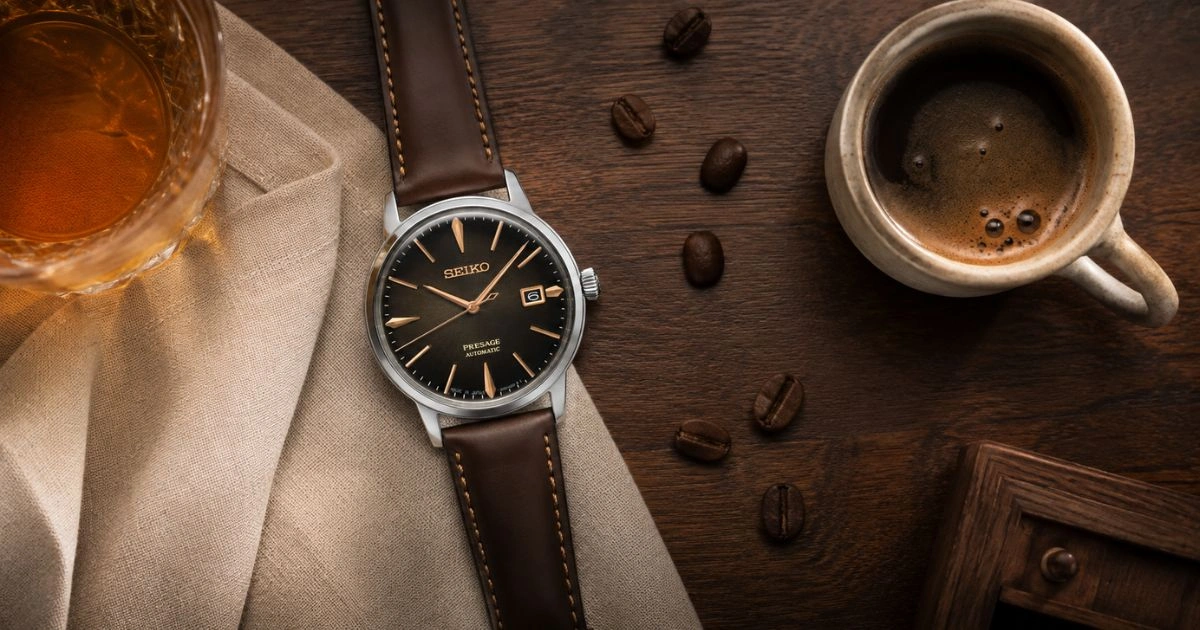
There are few names in horology that carry as much weight—and as rich a story—as Seiko. The story of Seiko began in 1881, when a 21-year-old entrepreneur named Kintaro Hattori opened a small shop selling and repairing watches and clocks in Tokyo’s Ginza district. Today, more than 140 years later, that modest storefront has evolved into one of the world’s most important watch manufacturers—a company whose innovations have fundamentally reshaped the industry not once, but multiple times.
What makes Seiko’s journey so remarkable is not merely its longevity, but the relentless spirit of innovation that has defined it from the very beginning. Guided by the founder’s philosophy to be “Always one step ahead of the rest,” Seiko has consistently pushed the boundaries of what watchmaking can achieve. From producing Japan’s first wristwatch to triggering the quartz revolution that transformed global timekeeping, from developing the hybrid Spring Drive movement to introducing GPS solar technology, Seiko’s history is a masterclass in how vision, craftsmanship, and determination can elevate a small local business into a global powerhouse.
The Birth of a Visionary: Kintaro Hattori and Early Years
From Antiques to Timepieces
Kintaro Hattori was born in 1860 in Ginza, Tokyo, the eldest son of an antiques dealer. Growing up in the bustling commercial heart of Edo (as Tokyo was then known), young Hattori developed an early fascination with the intricate mechanics of timepieces—imported clocks and watches that were still a novelty in Japan at the time.
At just 21 years old, Hattori took a leap of faith that would change horological history. In 1881, he established “K. Hattori & Co.” (the present-day Seiko Group Corporation) in Ginza, opening a shop dedicated to selling and repairing imported clocks and watches. It was a modest beginning, but Hattori possessed something far more valuable than capital: an unwavering commitment to quality and an ambition to compete with the best in the world.
The Seikosha Factory and Vertical Integration
Eleven years after opening his shop, in 1892, Hattori took a decisive step toward self-sufficiency. He purchased a disused factory in what is now Tokyo’s Sumida Ward and founded the “Seikosha” factory. The name “Seikosha” combined “seiko”—meaning both “exquisite” and “success” in Japanese—with “sha,” meaning “house”. It was a name that perfectly captured Hattori’s dual ambition: to produce timepieces of exceptional precision and to build a successful, enduring enterprise.
What set Seikosha apart from its competitors was Hattori’s commitment to vertical integration. Rather than outsourcing components to various suppliers—the common practice among Japanese clock manufacturers at the time—Seikosha brought almost all production processes in-house. The factory processed and assembled mechanical parts, produced dials, hands, and wooden cases, and maintained strict quality control at every stage. This approach resulted in superior quality and faster product development, and within six to seven years, Seikosha had become Japan’s largest producer of wall clocks.
The First Japanese Wristwatch
In 1895, Seikosha introduced its first pocket watch, the Timekeeper. This was a vital step forward that paved the way for an even more significant milestone. As pocket watches dominated the market and wristwatches were still a novelty imported in small numbers, Kintaro Hattori recognized that the future belonged to wrist-worn timepieces.
In 1913, Hattori realized his vision with the Laurel—Japan’s very first wristwatch. About one-fifth the size of a standard pocket watch, the Laurel was extraordinarily difficult to manufacture, and the company could produce only 30 to 50 pieces per day. Yet its significance cannot be overstated: for the first time, a Japanese company had created a wristwatch that could stand alongside the best offerings from Europe and America.
Rising from the Ashes: The Birth of the Seiko Brand
The Great Kanto Earthquake
On September 1, 1923, disaster struck. The Great Kanto Earthquake ravaged Tokyo, and the fires that followed destroyed Kintaro Hattori’s factory, his watch store, and his personal residence. Everything he had built over four decades lay in ruins.
Many would have accepted defeat. Hattori, however, saw this catastrophe as an opportunity for renewal. Less than three months after the earthquake—on November 20, 1923—he resumed business. His determination to rebuild was nothing short of remarkable.
The First Seiko-Branded Watch
In 1924, one year after the earthquake, K. Hattori & Co. prepared to release a new wristwatch. Originally intended to be named “Glory,” Hattori instead chose a name that would mark a fresh start. Drawing from the name of his factory, Seikosha—which embodied both precision and success—he named the watch “Seiko”.
This was the very first product to carry the Seiko brand name. Today, Seiko is recognized around the world as a symbol of refined design and exceptional manufacturing, and it all began with this watch.
A Rising Reputation
The 1920s saw Seiko’s reputation soar. In 1929, the Ministry of Railways designated Seiko’s pocket watch as the official railroad watch for Japan National Railways. Railroad watches demanded exceptional accuracy—lives depended on precise timekeeping for safe train operations—and this designation was a powerful endorsement of Seiko’s quality.
Meanwhile, in 1894, Hattori had erected the first clock tower in Ginza, and in 1932, an iconic clock tower was built that would become a landmark of the district. These structures were more than mere timepieces; they were symbols of Seiko’s growing prominence and its commitment to being “always one step ahead.”
Post-War Revival and the Pursuit of Mechanical Excellence
Rebuilding After Devastation
The Second World War brought another period of immense challenge for Seiko. Yet, as with the earthquake, the company demonstrated remarkable resilience. In the post-war years, as Japan rebuilt its economy, Seiko focused on independent technological development. The company shifted from emulating overseas designs to pioneering its own innovations, actively collecting information and enhancing its research capabilities.
The Marvel and the Crown
In 1956, Seiko introduced the Marvel, a mechanical watch for men created entirely from proprietary Seiko technology. The Marvel swept away rival timepieces in major industry competitions and even overtook Swiss products in a competition hosted by the American Watchmakers-Clockmakers Institute. The Marvel dispelled the prevailing stereotype that Japanese watches were inaccurate and unreliable, boosting Seiko’s confidence and fueling its determination to compete with the world’s best.
In 1959, Seiko introduced the Crown, building on the Marvel’s foundation with even greater precision. This set the stage for something truly extraordinary.
The Birth of Grand Seiko
In 1960, Seiko applied all its parts precision techniques, assembly techniques, and adjustment techniques to create the First-Generation Grand Seiko. The Grand Seiko set a new standard stricter than the world’s highest accuracy standard of the time—the international chronometer testing standard known as B.O..
Grand Seiko was the realization of Kintaro Hattori’s mission to create the “ideal watch”—a timepiece that perfectly embodies precision, legibility, and durability. It proved to the world that Seiko was a manufacturer of top-quality mechanical watches, able to compete with any global brand in both precision and appearance.
The Seiko Sportsmatic 5 and Global Expansion
In 1963, Seiko introduced the Seiko Sportsmatic 5—Japan’s first automatic day-date watch. The “5” in its name represented five key features: an automatic movement, water resistance, an integrated day and date window at the 3 o’clock position, a crown at the 4 o’clock position, and a case and bracelet built for durability.
The following year, 1964, proved pivotal. Seiko served as the Official Timer for the Tokyo Summer Olympics—a monumental opportunity that showcased Japan’s manufacturing prowess to the world. Sales of the Sportsmatic 5 increased remarkably overseas, trailblazing Seiko’s path to global dominance in the self-winding watch market.
The Quartz Revolution: Changing Watchmaking Forever
The World’s First Quartz Wristwatch
On December 25, 1969, Seiko introduced the world’s first quartz wristwatch: the Seiko Quartz Astron. It is no exaggeration to say that this watch changed the world.
The Quartz Astron was approximately 100 times more accurate than standard mechanical watches of the time, with a monthly error within ±5 seconds. It ran continuously for a full year—250 times longer than most mechanical watches. The quartz frequency at that time was 8192 Hz, one-fourth the frequency of modern quartz movements.
Seiko then opened the quartz patents to the world. This act, perhaps more than the invention itself, set the global standard for quartz watchmaking and enabled watchmakers everywhere to produce their own quartz wristwatches.
The Quartz Crisis and Seiko’s Dominance
The impact was seismic. By 1971, exports accounted for half of the total 14 million Seiko watches sold. By 1978, exports accounted for two-thirds of total sales of 19 million watches. The Swiss watch industry, which had dominated mechanical watchmaking for centuries, was decimated—a period now known as the “Quartz Crisis”.
But Seiko didn’t stop with quartz. In 1973, the company launched the world’s first digital watch with a 6-digit liquid crystal display (LCD). In 1975, Seiko introduced the world’s first titanium-case diver’s watch, water-resistant to 600 meters—ideal for saturation diving. In 1986, Seiko unveiled the first Kinetic prototype at the Basel Fair—the world’s first watch to convert kinetic movement into electrical energy.
The Modern Era: Spring Drive and Beyond
The Third Engine
In 1977, a young engineer at Suwa Seikosha named Yoshikazu Akahane began dreaming of an entirely new kind of watch movement. His vision: combine the accuracy of an electronic timekeeper with power derived from a mainspring. The development would take more than 20 years.
In 1999, that dream became reality with the introduction of Spring Drive—the world’s first watch driven by mainspring power and controlled by quartz at the same time. The Tri-synchro regulator controls and releases mechanical, electrical, and electromagnetic energy generated by the mainspring. Because there is no escapement—the traditional regulating mechanism in mechanical watches—all motion within the movement is circular, allowing the hands to move with a unique, perfectly smooth “glide-motion”.
In 2004, Grand Seiko introduced its first model featuring the automatic winding Spring Drive Caliber 9R65, with three days of power reserve. Today, Spring Drive is celebrated as the industry’s “third engine”—a fusion of mechanical and electronic watchmaking that could only have come from a company mastering both disciplines.
GPS Solar: Time Without Boundaries
In 2012, Seiko pushed the boundaries once more with the world’s first GPS Solar watch. By developing its own low-energy-consumption GPS receiver, Seiko created a watch that connects to the global network of GPS satellites, recognizes all 39 time zones, and adjusts time and date data automatically—all while generating the energy it needs from light alone.
The Mechanical Renaissance
Despite its leadership in quartz and electronic watchmaking, Seiko never abandoned its mechanical heritage. In 1998, the mechanical Grand Seiko was revived with the 9S series movement. In 2020, Grand Seiko opened Studio Shizukuishi in Iwate Prefecture—the new birthplace of all modern Grand Seiko 9S mechanical timepieces. Today, Grand Seiko offers three distinct drive systems: quartz, mechanical, and Spring Drive.
Conclusion
The story of Seiko is a story of resilience, vision, and an unyielding commitment to innovation. From a single shop in Ginza to a global watchmaking powerhouse, Seiko has spent more than 140 years proving that greatness is not a destination but a continuous journey.
What sets Seiko apart is not any single invention or achievement, but the philosophy that has guided it from the very beginning: to be “Always one step ahead of the rest”. This philosophy drove Kintaro Hattori to create Japan’s first wristwatch in 1913. It compelled Seiko’s engineers to develop the world’s first quartz wristwatch in 1969. It sustained Yoshikazu Akahane through more than 20 years of development to realize the Spring Drive. And it continues to inspire Seiko’s watchmakers today as they push the boundaries of what a wristwatch can be.
For collectors and enthusiasts, Seiko offers something uniquely compelling: a brand that spans the full spectrum of watchmaking, from accessible everyday timepieces to haute horlogerie creations that rival the finest Swiss offerings. More importantly, it offers a living connection to horological history—a reminder that true innovation doesn’t happen in isolation, but through the patient, persistent pursuit of a vision. That vision, born in a small Ginza shop in 1881, continues to shape the way we measure time today.