
Editorial
Cartier Watch Investment: Best Models That Hold Value
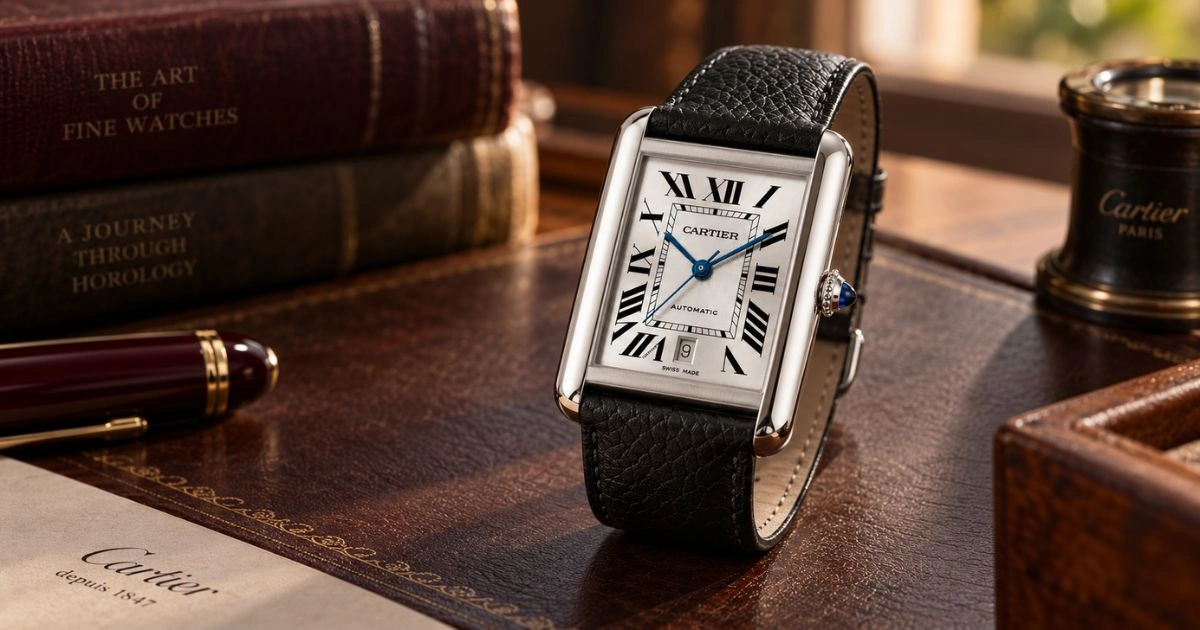
For decades, the conversation around luxury watch investment has been dominated by a familiar cast of characters—the steel sports Rolex, the Patek Philippe Nautilus, the Audemars Piguet Royal Oak. These are the watches that command waiting lists, spark bidding wars, and dominate collector forums. Yet a quiet but powerful shift has been underway, one that has seen a Parisian jeweler with over a century of horological heritage emerge as a formidable force in the world of watch collecting.
That brand is Cartier.
Recent data has revealed that certain Cartier references have appreciated at rates that surpass even the most celebrated models from Rolex. In fact, an analysis of secondary market performance found that among the top 20 watches with the strongest value gains since 2018, ten were Cartier references—and not a single Rolex made the list. This is not a fleeting trend but a fundamental realignment in how collectors perceive value, driven by shifting tastes, demographic changes, and a growing appreciation for design-driven horology.
This article explores why Cartier watches have become such compelling investments, examines the specific models that have demonstrated the strongest value retention, and provides the essential context collectors need to navigate this evolving landscape.
The Cartier Investment Thesis: Why the Brand Stands Apart
Design That Transcends Time
The foundation of any enduring investment-grade watch is design that does not date. Cartier possesses this in abundance. The brand’s most iconic models—the Tank, the Santos, the Panthère—were conceived decades ago yet remain as relevant today as the day they were introduced. This is not accidental. Cartier’s approach to design is rooted in the principles of purity, proportion, and architectural clarity.
What makes Cartier’s design language particularly valuable from an investment perspective is its distinctiveness. A Cartier watch is immediately recognisable. The rectangular case of the Tank, the square bezel with exposed screws of the Santos, the supple, integrated bracelet of the Panthère—these are not generic luxury watches. They are statements of identity. As one industry observer noted, what these high-performing models have in common is “iconic design that endures for decades and demand that is not dependent on waiting lists but on genuine collector value”.
The Shifting Demographics of Collecting
One of the most significant factors driving Cartier’s rising investment profile is the changing face of the luxury watch collector. Younger buyers, particularly Generation Z, are approaching watch collecting with different priorities than their predecessors. According to data from Chrono24, Cartier’s share of total watch sales among Gen Z increased from 1.7% in 2018 to 6.8% today—a fourfold increase that far outpaces the brand’s overall market performance.
This demographic shift reflects a broader cultural movement toward dressier, more elegant timepieces. After years of oversized sports watches dominating the market, collectors are rediscovering the appeal of refined, historically significant designs that work as well with a suit as they do with casual attire. Cartier, with its deep heritage in both jewelry and watchmaking, is perfectly positioned to capitalise on this aesthetic evolution.
The Crown Jewels: Cartier’s Best Value-Holding Models
The Cartier Tank: A Century of Enduring Appeal
The Cartier Tank stands as perhaps the most recognisable rectangular watch ever created. Introduced in 1917, its design was inspired by the treads of military tanks seen during World War I—a moment of creative genius that transformed a symbol of mechanised warfare into an object of timeless elegance. The Tank’s clean lines, Roman numerals, and distinctive brancards (the vertical bars running down the sides of the case) created a template that has been endlessly imitated but never equalled.
Within the Tank family, certain references have demonstrated remarkable investment potential. The Must de Cartier Tank Vermeil (Ref. 1613) has emerged as a standout performer, with one study showing it topped all luxury watches in value appreciation over an eight-year period. What makes the Tank Vermeil particularly noteworthy is its accessibility—it was not an ultra-exclusive, limited-production piece but rather a model that was relatively attainable when introduced.
For collectors, the key to understanding Tank investment value lies in distinguishing between different iterations. The Tank Louis Cartier, produced exclusively in precious metals, represents the purest expression of the design and carries corresponding collector appeal. The Tank Américaine and Tank Française offer more contemporary interpretations, while vintage examples from the 1970s have shown consistent appreciation.
The Santos: The Original Pilot’s Watch
If the Tank represents Cartier’s mastery of rectangular forms, the Santos embodies the brand’s pioneering spirit. Created in 1904 for Brazilian aviator Alberto Santos-Dumont, the Santos is widely regarded as the world’s first men’s wristwatch. Its square case with exposed screws was a radical departure from the pocket watches that dominated the era, and its aviation-inspired design language remains strikingly modern over 120 years later.
The Santos has undergone several evolutions, each with its own collector profile. The Santos de Cartier, with its integrated bracelet and modern proportions, has become a favourite among contemporary collectors. The Santos-Dumont, a more dress-oriented interpretation, appeals to those seeking a thinner, more elegant profile. Vintage Santos models, particularly the Santos Carree and Santos Galbee from the 1970s and 1980s, have demonstrated consistent annual appreciation.
From an investment perspective, the Santos offers a compelling combination of historical significance and distinctive design. Its square case differentiates it from the round watches that dominate the luxury market, and its aviation heritage adds a layer of narrative that collectors find increasingly valuable.
The Panthère: Quiet Ascendancy
Among Cartier’s collections, the Panthère has emerged as a particularly strong performer in terms of value retention. With its supple, integrated bracelet and compact proportions, the Panthère represents a distinctively feminine interpretation of the sports-luxury genre—though its appeal is by no means limited to any single demographic.
Recent market analysis has shown the Panthère leading Cartier’s collections in value retention, outperforming even the Tank and Santos in this regard. Two-tone and yellow-gold references have demonstrated particularly strong appreciation. What makes the Panthère compelling from an investment standpoint is its unique positioning—it occupies a space between jewelry and watchmaking that few other brands can effectively navigate.
The Crash: The Collector’s Holy Grail
No discussion of Cartier investment pieces would be complete without mentioning the Crash. This surreal, asymmetrical timepiece, created in extremely limited quantities during the 1960s, represents the pinnacle of Cartier collecting. The story goes that the design was inspired by a melted Cartier watch recovered from a car accident—a narrative that has only added to its mystique.
The Crash is not a watch for the casual collector. Production was limited to perhaps a few hundred examples, and examples that appear at auction command extraordinary attention. A rare Cartier London Crash from 1987, believed to be one of only three examples, sold for a record-setting figure at auction.
For most collectors, the Crash represents an aspirational piece—a reminder that Cartier’s investment potential extends well beyond its more accessible models.
Factors That Influence Cartier Investment Value
Condition and Originality
As with any collectible, condition is paramount. A Cartier watch that retains its original case finishing, dial, and hands will always command a premium over one that has been polished or refinished. The presence of original boxes, papers, and service documentation adds significant value.
Material and Movement
The materials from which a Cartier watch is crafted significantly influence its investment potential. Precious metal cases—yellow gold, rose gold, white gold, and platinum—generally hold value better than steel, though certain steel references have demonstrated strong performance due to their relative rarity. The movement also matters. Mechanical movements, particularly those manufactured in-house, are generally more desirable than quartz alternatives.
Rarity and Discontinuation
When Cartier discontinues a reference, the existing supply becomes fixed while demand often continues to grow. This dynamic has played out repeatedly across the brand’s collections, with discontinued references frequently outperforming their current-production counterparts.
Provenance
A watch with an interesting history—particularly one associated with a notable figure or significant event—can command a substantial premium. Cartier’s long history of serving royalty, celebrities, and cultural icons provides ample opportunities for such provenance.
The Bigger Picture: Cartier’s Market Momentum
The investment case for Cartier watches is supported by broader market trends. The brand’s watch division has grown substantially, with analyst estimates suggesting sales exceeded CHF 3 billion in 2025. Prices for Cartier models on the secondary market have shown consistent gains, with the WatchCharts Cartier index rising 8.6% in a single year. Auction results for vintage pieces have been particularly strong, with total sales of Cartier at auction reaching approximately $523 million in 2025—a 43% increase from the previous year.
What makes these figures particularly noteworthy is the context. The luxury watch market experienced a significant correction following the pandemic-era boom, with many heavily hyped models seeing substantial declines. Yet Cartier has demonstrated resilience, with select references continuing to appreciate even as broader market conditions cooled.
This resilience speaks to the fundamental strength of the Cartier investment proposition. Unlike some brands whose value is driven primarily by speculation and hype, Cartier’s appeal is rooted in genuine collector appreciation for design, heritage, and craftsmanship.
Conclusion
The landscape of luxury watch investment is evolving, and Cartier has emerged as a central figure in this transformation. What was once dismissed by some as a “jewelry brand” has proven to be one of the most consistent performers in the secondary market, with models that combine enduring design, historical significance, and genuine collector appeal.
For those considering a Cartier watch as an investment, the key is to focus on the models that have demonstrated the strongest value retention: the Tank, with its century of iconic design; the Santos, with its pioneering aviation heritage; the Panthère, with its distinctive elegance; and, for the truly committed collector, the elusive Crash.
But perhaps the most important lesson from Cartier’s investment story is a broader one. The watches that hold value over the long term are not necessarily the most expensive or the most hyped. They are the watches that possess what cannot be manufactured overnight: authentic design, genuine heritage, and the ability to transcend the trends of any single era.
Cartier possesses all of these qualities in abundance. Whether you are a seasoned collector or a newcomer to the world of luxury watches, understanding why Cartier watches hold their value is essential to navigating the modern collecting landscape. The brand’s ascent is not a passing moment but a reflection of deeper shifts in how we define and appreciate lasting value in horology.