
Editorial
Panerai Radiomir: The Origin of a Diving Watch Legend
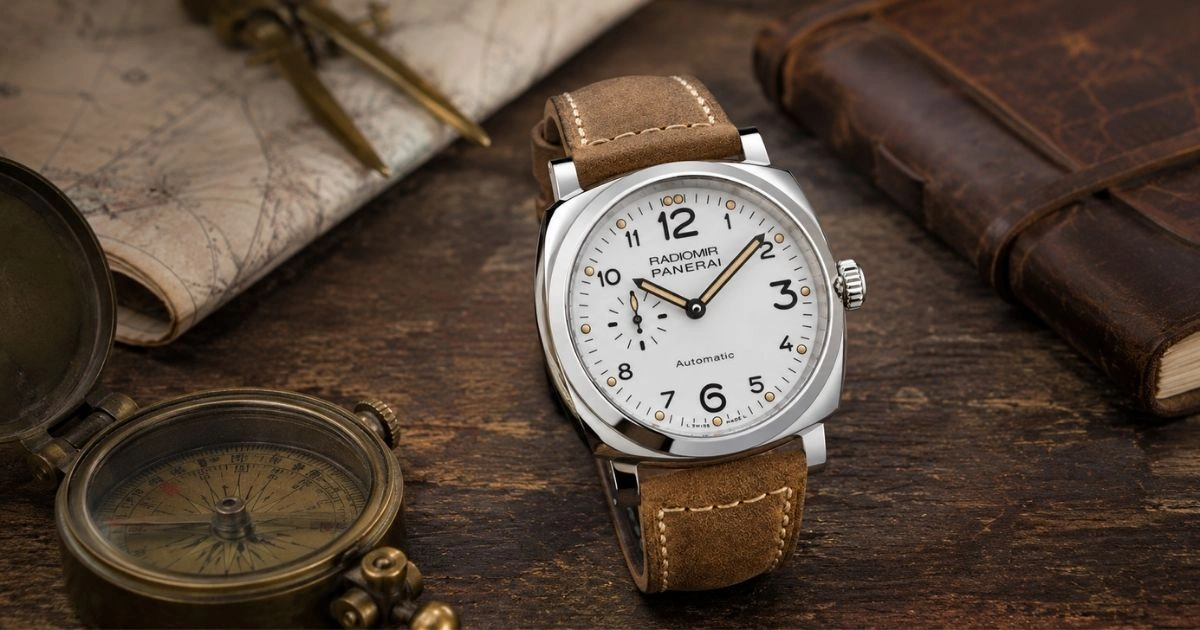
There are few watches in the world that can claim to have changed the course of horological history quite like the Panerai Radiomir. Before the modern diving watch became a staple of luxury collections, before the oversized wristwatch trend conquered the industry, and before Panerai became a household name among collectors, there was the Radiomir—a watch born not in a boardroom or a design studio, but on the wrists of Italian combat swimmers navigating the treacherous waters of the Mediterranean during World War II.
The Panerai Radiomir is more than just a timepiece; it is the origin story of an entire brand and, arguably, the foundation upon which the modern dive watch was built. With its distinctive cushion-shaped case, wire lugs, oversized crown, and unparalleled legibility, the Radiomir established a design language that remains as fresh and compelling today as it was nearly a century ago. For collectors and enthusiasts alike, understanding the Radiomir means understanding the very essence of Panerai.
The Birth of an Idea: Radiomir Before the Watch
A Florentine Beginning
To understand the Radiomir, one must first understand the house of Panerai. The story begins not in Switzerland, but in Florence, Italy, where Giovanni Panerai opened his first watchmaking workshop in 1860. The business, known as Officine Panerai, quickly established itself as a supplier of precision instruments, and by the early 20th century, the company had become the official supplier to the Royal Italian Navy. This relationship would prove to be the catalyst for one of watchmaking’s most legendary creations.
The Luminour Breakthrough
The name “Radiomir” actually predates the watch itself. In 1916, Guido Panerai patented a self-luminous substance based on radium bromide and zinc sulfide. The compound, filed for patent in France on March 23, 1916, was named “Radiomir”. It was initially used not for wristwatches, but for the luminous dials of military instruments—gun sights, depth gauges, and compasses that needed to be readable in the darkest conditions.
The name itself carries a dual meaning: it refers both to the radium-based luminous paint and, later, to the watch that would bear its name. This luminous innovation was so effective that the Italian Navy purchased numerous “Radiomir tubes” from Panerai, and the compound was also patented in the United Kingdom and France. Without Radiomir, the small Florentine instrument workshop might never have developed its close relationship with the Italian Navy—and Panerai watches as we know them might never have existed.
From Instrument to Wristwatch: The First Radiomir Prototype
The Navy’s Request
The transition from luminous instrument maker to watch manufacturer came in the 1930s, driven by necessity. In 1935, the Italian Navy launched a secret program for underwater attack vehicles and their operators, creating an urgent demand for highly durable diving watches. The Navy’s frogmen, who would pilot the “Siluro a Lenta Corsa” (SLC)—a human torpedo nicknamed the maiale, or pig—needed a timepiece that could withstand extreme underwater conditions while remaining perfectly legible in near-total darkness.
Following disappointing tests of available watches at the time, the Royal Italian Navy approached Giuseppe Panerai with a request to design a watch resistant to extreme conditions while maintaining precise timekeeping.
The 1936 Prototype
The prototype that Panerai submitted to the First Submarine Group Command was called the “Radiomir,” named after the luminous paint that made it so effective. The first documented appearance of the Panerai Radiomir watch in official records dates to March 1936.
This first prototype was truly groundbreaking. It featured an enormous 47mm cushion-shaped case—a size that was practically unheard of in an era dominated by modestly proportioned dress watches. The watch was equipped with self-luminous hands and indices, a screw-down case back, and a screw-down crown, making it a genuinely waterproof wristwatch. Perhaps most remarkably for the time, the Radiomir featured a modern acrylic crystal (known as Perspex in the documents) rather than the glass that was then popular, offering both shatter resistance and improved readability.
Only ten prototype watches were reportedly made in 1936. They were submitted for rigorous testing—and they passed with flying colors.
The Rolex Connection
Collaboration with a Neighbor
One of the most fascinating aspects of the early Radiomir story is Panerai’s collaboration with Rolex. At the time, Rolex was the only manufacturer capable of producing watches with screw-down crowns—a feature essential for achieving the water resistance the Italian Navy demanded.
The early Radiomir cases were, in essence, extra-large 47mm Rolex Oyster cases with screw-down crowns. Giuseppe Panerai commissioned Rolex, with whom he had a long-standing business relationship, to manufacture the waterproof watch case, while Panerai provided the dial with the Radiomir luminous material.
The collaboration went deeper than the case. The movements powering these early Radiomir watches were 16-ligne caliber 618 movements produced by Cortebert, a Swiss movement manufacturer, but finished and decorated by Rolex with Geneva stripes. Rolex couldn’t provide a caliber large enough to fit the huge 47mm case, so the Cortebert movement was the solution.
Reference 3646
Following the success of the prototype, a small series of Radiomir watches, reference 3646, were produced for the Italian Navy starting in 1938. These watches featured the same 47mm cushion-shaped case with soldered curved wire lugs, a screw-down “onion” crown, a 12-sided case back, and a Perspex crystal.
The Radiomir ref. 3646 became the quintessential wartime Panerai. It was supplied not only to the Italian Navy’s frogmen and SLC torpedo riders but also to German military swimmers of the Kriegsmarine. Interestingly, many of these watches featured unsigned dials—an intentional measure to avoid identification of the origins of the watch or the navy unit if the diver wearing it was captured.
Design Evolution: The Radiomir Takes Shape
The Sandwich Dial
One of the most iconic features of the Radiomir—and indeed of Panerai as a whole—is the “sandwich” dial. This ingenious construction consists of two superimposed discs. The upper disc has numerals and hour markers cut out, while the lower disc is coated with luminous material. This design allowed for a greater volume of luminous paste to be applied, dramatically improving legibility in dark underwater conditions.
The sandwich dial remains one of Panerai’s most recognizable signatures, still used in many modern Radiomir and Luminor references. It exemplifies the brand’s philosophy of prioritizing function above all else—and in doing so, creating a design of timeless aesthetic appeal.
The Wire Lugs and Onion Crown
The early Radiomir’s design was dictated purely by necessity, but as sometimes happens with objects designed with singular dedication to purpose, it achieved a sort of renaissance as a design object. The welded wire lugs—simple loops of wire soldered to the case—were practical, allowing the watch to be secured to the thick straps worn over diving suits. The large conical “onion” crown was designed for easy grip, even when wearing gloves.
The 1940 Evolution
In 1940, the Radiomir underwent a significant evolution. The Italian Navy requested that the watch could resist extreme tension and had better water resistance. The response was the Radiomir 1940, which replaced the wire lugs with standard integrated lugs. This case shape became the prototype for the Radiomir 1940 collection and marked an important step in the watch’s design evolution.
The California Dial
Among the most collectible vintage Radiomir references is the so-called “California dial”—a distinctive design featuring a mix of Roman numerals on the upper half and Arabic numerals on the lower half. This dial design, patented by Rolex in 1941, appeared on some ref. 3646 watches, with a small group reportedly intended to be presented to high-ranking Navy officials. Today, California dial Radiomirs are among the most coveted vintage Panerai watches among collectors.
The Eight-Day Power Reserve
A Military Necessity
Another hallmark of the Radiomir lineage is the eight-day power reserve. In 1956, Panerai developed the GPF 2/56 diving watch—later known as the “Egiziano” or “Egyptian”—for the Egyptian Navy. This watch featured a massive 60mm case and, crucially, an eight-day power reserve movement.
The eight-day power reserve was not a luxury feature but a military necessity. It meant that the watch could be wound once a week and remain operational throughout an extended mission, reducing the risk of the watch stopping at a critical moment. The Angelus SF240 caliber, which Panerai used for these watches starting in 1958, became legendary for its reliability and impressive power reserve.
The “8 Giorni Brevettato” (8 Days Patented) inscription on the dial became a point of pride for Panerai, and it remains a feature celebrated in modern Radiomir references.
The Radiomir and the Luminor: Two Branches of the Same Tree
A New Luminous Material
In 1949, Panerai patented a new luminous material: Luminor. Based on tritium rather than radium, Luminor was less radioactive and offered improved performance. The name would eventually give rise to Panerai’s other iconic collection.
The Crown Guard
The Luminor collection introduced a distinctive crown-protecting bridge—a locking lever mechanism that improved water resistance and protected the crown from impact or accidental operation during underwater missions. This crown guard became the defining visual difference between the Radiomir and Luminor collections.
Different Personalities
Today, the Radiomir and Luminor represent two sides of the Panerai coin. The Radiomir, with its cushion-shaped case, wire lugs (or integrated lugs in the 1940 variant), and absence of a crown guard, is generally considered the dressier, more vintage-inspired option. It slides under shirt cuffs more easily and carries a more organic, pebble-like feel. The Luminor, with its crown guard and more robust construction, is the sportier, more casual sibling.
Many collectors find that a 47mm Radiomir wears smaller than a 44mm Luminor because of the reduced thickness and more organic case shape. This subtlety is part of the Radiomir’s enduring appeal.
From Military Secret to Luxury Icon
The Civilian Era
For decades, Panerai watches were strictly military-issued, with no commercial production available to the public. The designs were protected by military secrecy. It wasn’t until 1993 that Panerai launched its first collection for civilian customers, including the Luminor and Mare Nostrum.
A civilian version of the Radiomir would follow in 1998 with a commemorative re-edition in platinum. This was a statement of intent by the Vendôme Group (later Richemont), which had acquired Panerai in 1997. The house was being repositioned as a luxury watch brand, and the Radiomir—as the origin of the Panerai legend—would lead the way.
The Radiomir Today
Today, the Radiomir collection stands as Panerai’s most historically significant line. Modern Radiomir references honor the original prototypes while incorporating contemporary technical expertise. The collection includes models with 45mm cases—slightly smaller than the original 47mm, responding to contemporary lifestyles through evolutionary adaptation.
Recent releases, such as the Radiomir Otto Giorni Eight-Day Power Reserve watches PAM01347 and PAM01348, are inspired directly by the Radiomir prototypes made for the Italian Navy. These watches feature Brunito eSteel™ cases and domed crystals reminiscent of the Plexiglass of yesteryear, creating a powerful sense of nostalgia.
The Radiomir Quaranta (meaning “forty” in Italian, referring to the 40mm case size) has also expanded the collection’s appeal to those who prefer a more modestly proportioned wristwatch without sacrificing the Radiomir’s distinctive character.
The Radiomir Quaranta (meaning “forty” in Italian, referring to the 40mm case size) has also expanded the collection’s appeal to those who prefer a more modestly proportioned wristwatch without sacrificing the Radiomir’s distinctive character.
Why the Radiomir Matters
The First Modern Dive Watch
The Panerai Radiomir preceded the birth of the modern dive watch by some time. It was a pioneer—a watch that established many of the features we now take for granted in dive watches: exceptional water resistance, high legibility in low light, and robust construction capable of withstanding extreme conditions.
A Design Icon
Beyond its historical significance, the Radiomir is simply one of the most recognizable and iconic watch designs ever created. Its cushion-shaped case, large diameter, and minimalist dial have influenced countless other watches and inspired a devoted following of collectors known as “Paneristi.”
A Living Legacy
Perhaps most remarkably, the Radiomir is not a relic of the past but a living, breathing collection that continues to evolve. Panerai consistently releases new Radiomir references that honor the original while incorporating modern materials, movements, and design sensibilities. The Radiomir remains as relevant today as it was when it first appeared on the wrists of Italian frogmen nearly a century ago.
Conclusion
The Panerai Radiomir is more than a watch—it is a piece of history, a testament to human ingenuity, and a reminder that the most enduring designs are often born from the most practical needs. From its origins as a radium-based luminous compound patented in 1916 to its evolution into a wartime essential for Italian combat swimmers, the Radiomir has traveled an extraordinary journey.
What makes the Radiomir truly special is that it was never designed to be beautiful—it was designed to be functional, reliable, and legible in the most extreme conditions imaginable. And yet, in pursuing function with such single-minded dedication, Panerai created something of profound aesthetic beauty. The Radiomir’s cushion-shaped case, wire lugs, onion crown, and sandwich dial have become design icons—instantly recognizable symbols of a brand that began in a small Florentine workshop and grew into a global luxury watchmaker.
For collectors, the Radiomir represents the purest expression of Panerai’s identity. It is the origin story, the foundation upon which everything else was built. For enthusiasts, it offers a tangible connection to a heroic era of underwater warfare and Italian craftsmanship. And for anyone who appreciates great watch design, the Radiomir stands as proof that form truly can follow function—and in doing so, create something timeless.
The Radiomir legend continues, with each new reference paying homage to the watches that came before while charting a course for the future. As Panerai celebrates its heritage and looks toward new horizons, the Radiomir remains at the heart of the brand—a luminous beacon guiding the way.